Jamaica Went Dark for Nine Hours. With AI, the Next Blackout Should Not Last That Long.
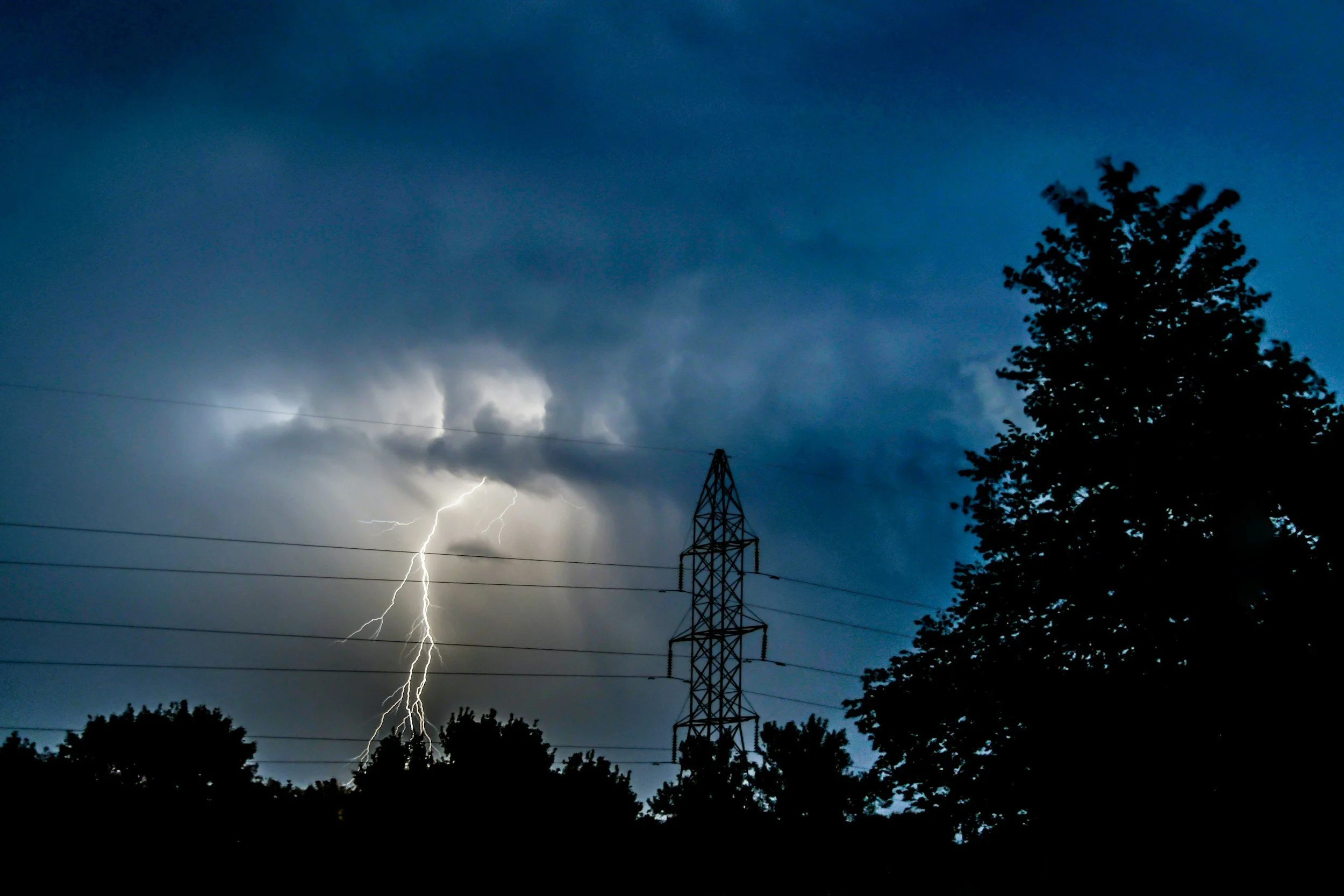
Lightning hit a Corporate Area substation, five transmission lines went down, and Jamaica spent nine hours dark. The 2026 hurricane season is one week old. AI was built for exactly this problem, and Jamaica is not yet using it.
On Friday 5 June 2026, a cascade of failures triggered by lightning around a Corporate Area substation took out five transmission lines and left every one of Jamaica's 2.8 million people without power for hours. AI tools already in commercial use, for cascade detection, lightning nowcasting, and restoration sequencing, could have shortened, and possibly prevented, that night.
What actually happened
The system failed at 9:02 PM. Jamaica Public Service Company (JPS) president and chief executive officer Hugh Grant later told a Saturday afternoon press conference that the company had lost five transmission lines from one of its major Corporate Area substations, with a parallel cascading effect that brought down generation across the entire grid (Jamaica Observer). The likely trigger, Grant said, was lightning striking near major substations and transmission infrastructure during heavy electrical activity over Kingston (ABC News).
Restoration was phased through the night. By 2 AM Saturday, about 20 percent of customers were back. By 6 AM, roughly 80 percent of JPS's 690,000 customers had power. Full restoration was reported a short time later (Al Jazeera; Rio Times).
The political reaction was swift. Energy Minister Daryl Vaz and Prime Minister Andrew Holness both called the outage "unacceptable". Vaz demanded a full report from JPS within 24 hours; the regulator (the Office of Utilities Regulation) asked for a preliminary report by Monday (Al Jazeera; Rio Times). The optics were sharper still because, only days before, JPS, the National Water Commission, Digicel, and FLOW had publicly assured Jamaicans that there were no single points of failure in their networks should a major hurricane strike the Corporate Area (Jamaica Observer Press Club).
Friday night was not a hurricane. It was a thunderstorm. The 2026 Atlantic hurricane season is one week old.
What AI could have done about it
A cascading grid failure is one of the most studied problems in modern power engineering. The pattern is well understood: a local fault propagates because protection systems and operators cannot reconfigure the network fast enough. Modern AI was built precisely for this gap. Six tools, each already in commercial use elsewhere, would change Friday's story.
Sharper lightning nowcasting
AI weather models, including GraphCast and lightning-specific nowcasters, can flag intense electrical activity near critical substations in minutes-to-hours-ahead windows. JPS gets time to switch loads and harden protection schemes before strikes land.
Cascade detection and islanding
Real-time grid AI watches the network for the signature that turns one fault into a cascade, then isolates and "islands" sections of the grid in milliseconds. Five transmission lines tripping in sequence is exactly the case these systems are trained for.
Substation health monitoring
Sensors plus machine learning catch partial discharge, thermal anomalies, and ageing transformers before they fail. Lightning-vulnerable substations get fixed before lightning hits, not after.
Optimal black-start sequencing
When the grid goes dark, AI models solve the restoration sequencing problem in minutes and prioritize the loads that matter first: hospitals, water pumping stations, telecom hubs, fuel terminals.
Grid-edge energy orchestration
AI-coordinated microgrids, rooftop solar, batteries, and demand-response let critical buildings ride through a transmission failure. JPS does not have to carry every kilowatt by itself when the worst happens.
Targeted customer communications
Instead of one island-wide message, AI-driven comms can give specific neighbourhoods accurate restoration ETAs drawn from the live state of the grid. Less speculation, fewer call-centre crashes, more public trust.
Predict
Lightning AI flags an intense storm cell near a critical substation, fifteen to ninety minutes ahead.
Detect
Cascade-detection models spot the fault signature on the network within milliseconds of the first line trip.
Isolate
The system automatically islands affected sections, stopping the chain reaction before it pulls down generation across the country.
Restore
Black-start optimization orders the recovery sequence to maximize lives saved and minimize total customer-hours lost.
Communicate
Targeted, AI-generated updates give every parish a real ETA, instead of one nationwide silence.
A repeatable defensive pattern, well-tested in larger grids. Sources: IEEE Power and Energy Society; Caribbean AI analysis.
A grid that loses five transmission lines to lightning in one area is not a grid that survives a hurricane; it is a grid giving us a preview of what one will do. The physics of cascade failure is well understood. So is the AI that detects, isolates, and routes around it in milliseconds. We have spent more time apologizing for blackouts than we have spent buying the tools that prevent them. Adrian Dunkley · Regional expert in AI · Climate physicist, Climate Studies Group, Mona (CSGM), UWI
Tips for JPS, before peak hurricane season
The Office of Utilities Regulation has asked for a preliminary report by Monday. A useful one will go beyond root cause. It will quantify the AI gap, set a concrete twelve-month plan to close it, and commit to a resilience standard that does not need another blackout to be revised. Here is what that plan should contain.
| Action | What it returns | Effort |
|---|---|---|
| Add predictive maintenance to every major substation | Lightning-vulnerable equipment flagged and hardened before storms find it | Easy |
| Replace mass alerts with AI-driven neighbourhood communications | Accurate parish-level ETAs, less speculation, lighter load on call centres | Easy |
| Integrate lightning nowcasting with substation protection schemes | Pre-emptive switching ahead of confirmed strike clusters | Medium |
| Deploy AI cascade-detection on the transmission network | Single-area faults stop being single-cause islandwide failures | Medium |
| Build an AI-optimized black-start playbook | Faster, smarter restoration ordered around critical loads | Medium |
| Stand up grid-edge microgrid pilots in key parishes | Hospitals, water pumps, and telecoms ride through a transmission failure | Advanced |
The single most useful thing a regulator can ask for, beyond a root-cause report, is a public AI-readiness scorecard for the national grid. Twelve indicators across detection, isolation, restoration, and customer communications, updated quarterly. What gets measured publicly tends to get funded, especially when the next hurricane is six weeks away.
What citizens should do, this week and this season
JPS will write its report. Government will respond. Neither of those is something a household controls. What you can control is whether your family rides out the next nine hours, or the next nine days, with dignity and without panic. The 2026 Atlantic hurricane season opened on 1 June and runs through 30 November (NOAA), and Hurricane Melissa (Category 5, Jamaica, 28 October 2025) is the recent reminder of what an unprepared household looks like (US National Hurricane Center).
- Build a 72-hour pack: roughly four litres of water per person per day, non-perishable food, flashlight, spare batteries, manual can opener, cash, copies of ID, prescriptions, and insurance.
- Pre-charge devices any time a watch or warning is in effect: phones, laptops, power banks, the Bluetooth speaker, even the lawn-mower battery if it can run a fan.
- Save offline copies of your important documents, emergency contacts, your insurer's number, your doctor's number, and a parish-by-parish shelter list.
- Generators: service the unit, stock fuel safely, never run a generator indoors or in an attached garage. Carbon monoxide kills quietly.
- Water: fill bath tubs and large containers before any major weather event. National Water Commission supply often follows JPS down because pumps need electricity.
- Radio: a battery-powered or hand-crank radio means you can hear official updates after your phone gives up.
- Alerts: sign up for ODPEM notifications and follow the Meteorological Service of Jamaica, JPS, and the National Water Commission on social. Bookmark the US National Hurricane Center.
- Family communications plan: agree where you meet if the house is unsafe, and choose one out-of-island contact everyone checks in with.
- Use an AI assistant to build a parish-specific preparedness checklist. Tools fine-tuned for Caribbean households, including those Maestro AI Labs and others are developing, can adapt the plan to your home, family, and risk profile.
- Know your route to the nearest shelter without GPS. Phone networks may be down. The route lives in your head and on paper, not just in an app.
- SMEs and business owners: write a continuity plan that does not assume JPS, NWC, Digicel, and FLOW are all up at the same time. Friday night was the rehearsal.
In this order: unplug sensitive electronics to protect them from surges on restoration, conserve phone battery, find your radio, check on elderly neighbours, keep the fridge and freezer closed, and let one trusted contact off-island know you are safe. The first thirty minutes set the tone for the next twelve hours.
Where AI can sit on Jamaica's electricity system. Green marks functions already deployable today with commercial tools; gold marks functions still missing in the national grid as of June 2026.
How well do you know Friday's blackout?
Five sourced questions. Tap an answer for instant feedback.
Frequently asked questions
Friday night was a stress test Jamaica did not ask for, and the grid failed. The question that matters now is not who to blame but whether the country will use the next ninety days, the height of hurricane season, to install the tools that should already be in place. Detecting a cascade in milliseconds is not science fiction; it is procurement, and it is overdue. Caribbean AI Newsletter · June 2026
About Caribbean AI
Caribbean AI is the official directory of artificial intelligence companies, labs, and innovators in the Caribbean. We exist to connect startups, enterprises, and researchers driving the region's AI growth.
We track who is building AI in the Caribbean, what is being built, and what the region needs to compete. From Jamaica to Curaçao, from Guyana to the Bahamas, we document the people, organisations, and ideas shaping the Caribbean's AI future.