The Godfather of Caribbean AI (part 2)
Adrian Dunkley on Building, Capital, Culture, and the Regret That Nearly Cost a Generation
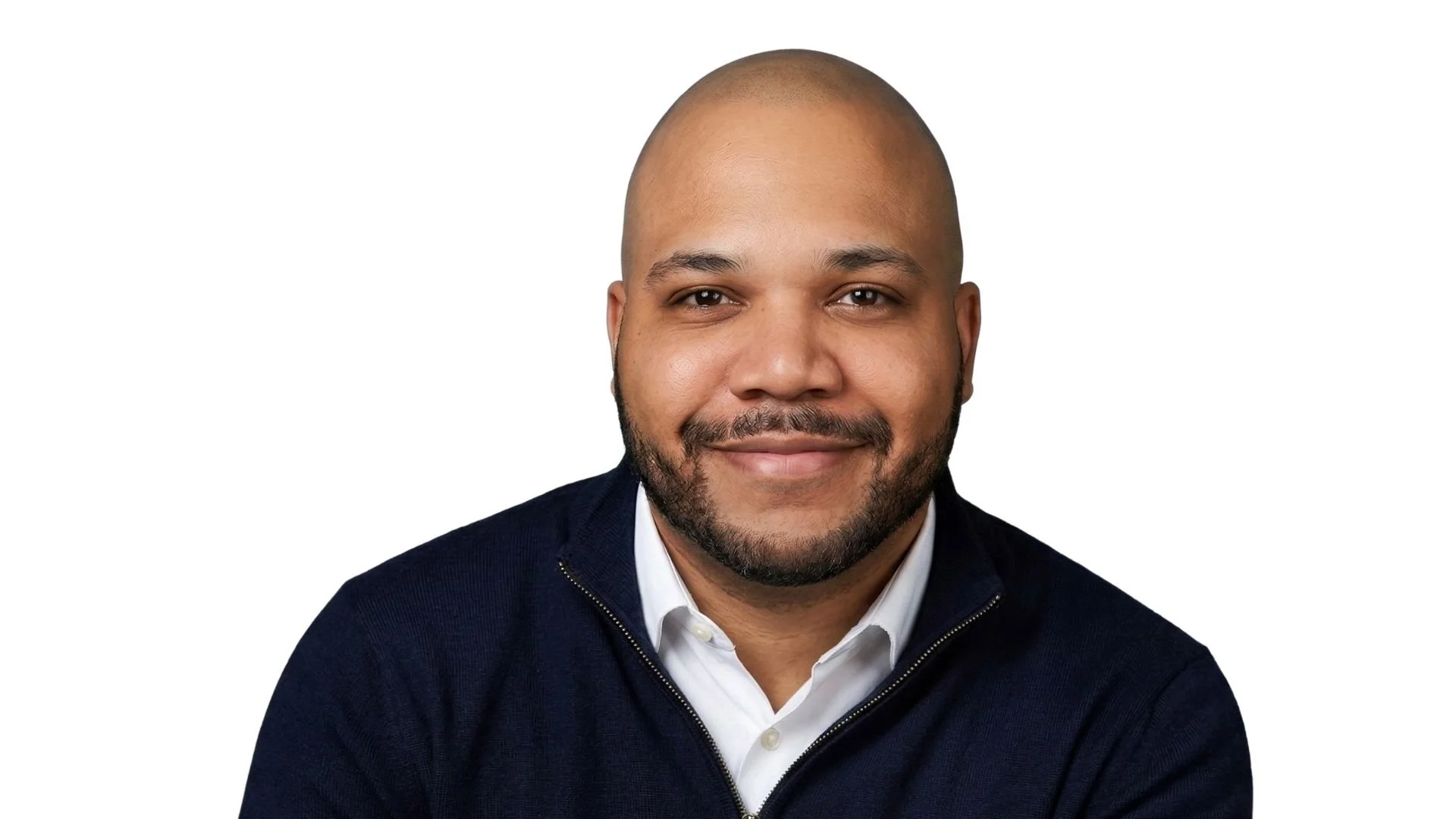
Adrian Dunkley, the Godfather of Caribbean AI
If we do it wrong, someone else will still build those companies. They will just build them somewhere else, and we will spend the next generation explaining to our children why we let it happen a second time.
TL;DR
Adrian's first working AI venture was a reinforcement learning loan granting system for small Jamaican businesses in 2013, which became the technical foundation for Credit Garden seven years later.
Maestro AI Labs is preparing for a JSE Junior Market listing in 2027 as a deliberate choice to keep Caribbean AI value inside Caribbean capital markets
His biggest professional regret is staying invisible for more than a decade, because the cost of that silence has been a missing generation of young Caribbean AI builders who had no visible template to follow.
A new suite of cultural preservation tools covering 4K upscaling of old Caribbean films and cartoons, multilingual AI dubbing across five regional languages, and native sign language interpretation is in closed testing.
Caribbean AI adoption sits at 8.2 percent against 16.3 percent globally. Four people with proper AI fluency now produce the output of ten under the old model, recovering around five hours per worker per week.
Paul: Let us pick up where we left off. You have built or co-built more than a dozen ventures. Which was the first one where you could feel the machinery working underneath the product?
Adrian: 2013. I built a reinforcement learning system for granting loans to small and micro businesses in Jamaica. Reinforcement learning was not a phrase you heard in Caribbean boardrooms in 2013. It was barely a phrase in most global boardrooms.
The system treated every loan as an experiment. The model made a decision, watched what happened over the following months, and updated its own view of which applicants the traditional scorecard had misjudged. Most lenders in the region in 2013 were using logistic regression on fairly narrow data. What I was doing differed in kind, not just in sophistication. It could learn from the consequences of its own decisions rather than simply restating an earlier version of the credit officer's bias.
I was writing significant portions of that code from scratch. The tooling we take for granted now did not exist. I trained on modest compute, validated against data that took weeks to get permission to use, and I was doing it mostly in the evenings after the day job. The first time the model identified a segment of the small business economy that the traditional system had been writing off for years, I knew we had something. These were people running profitable operations out of Cross Roads, Spanish Town, Portmore, Montego Bay, and their transaction history simply looked different from what the banks had been trained to recognise as creditworthy. The model did not care about that. It cared about repayment behaviour.
That system became the technical spine for several things that followed, including what eventually became Credit Garden during Covid. Covid made the problem urgent and visible, and the media picked up the story then. The underlying work had been proven years earlier when nobody was watching, and that is the pattern I want younger Caribbean builders to understand. The thing that looks like an overnight breakthrough is almost always a slow-built system finally meeting the moment that needed it.
Paul: You keep returning to exclusion. Credit access, safety data, climate information, disaster risk, and now cultural preservation. Why that problem set specifically? There are more profitable things to build.
Adrian: There are, and I have watched other founders build them successfully. The choice to keep pointing at exclusion is deliberate, and part of it is personal. The neurodivergence piece I talked about in our first conversation matters here. When you have lived inside a system that was not designed to see you, you recognise the same pattern when it shows up elsewhere. In credit. In climate data. In safety information. In how algorithms sort people into risk categories without them ever knowing. In how entire cultures get treated as niche and therefore unworthy of being rendered at full quality.
Our own research, through the IMPACT AI Lab and the StarApple AI dataset, gives you the specific picture. Caribbean generative AI adoption sits at 8.2 percent against 16.3 percent globally. One in twelve people here. One in six globally. We are running at half the world's pace. Latin America and the Caribbean together represent 6.6 percent of global GDP and receive 1.12 percent of global AI investment. Seventy-two percent of workers in the region are self-employed or in firms with fewer than ten people. If AI does not reach them, it does not reach us.
For a founder, those numbers describe a market the big platforms have no commercial reason to enter. You can build something genuinely useful and also make money, because you are the only one showing up. The exclusion problem and the business opportunity share the same underlying data and the same customers. That has been the consistent pattern across every company I have built.
Paul: Caribbean AI companies have a reputation for being capital-starved. You have raised hundreds of millions of Jamaican dollars across the ecosystem, and three months after the August launch, NVIDIA came in with support. Congratulations on that. For a company this young and in this market, that is not a small thing. How does a Caribbean AI company actually get to that table?
Adrian: It is a different type of difficult raising in the Caribbean, capital exists but the talent is in finding it and convincing it you are less of a bet and more an investment. Most investors are looking for safe, familiar but not boring, a very odd combination but it’s there money. I was fortunate to be on the other side of the table before I did my first raise, so that skepticisms, those hurdles were expected and normal to me. My first AI raise was with a US startup I cofounded, yes it was AI focused. It was and still is easier to raise capital outside of the Caribbean for Tech companies. I have raised hundreds of millions and each time was different, because each investor is different and wants to feel that way, and special of course.
NVIDIA coming in three months after the January launch of Maestro AI still catches me when I say it out loud. In 2021 my first solo company, StarApple AI [the first Caribbean AI company] attracted funding from the RJRGLEANER Group for a few hundred thousand, and we received a technical grant from Amazon for US$500k. The Development Bank of Jamaica have also been pivotal in our regional expansion, they allowed us to scale quickly and hire dozens of persons. If you notice very different funding sources, each had their own reasons for supporting us, but these are not organizations that stake their names on infrastructure bets in small markets without a reason. When they showed up, what they were really confirming is that AI can release untapped economic value in our underserved markets. For every founder in this region who has been told their market is too small to matter, I want them to understand that the only difference between them and their counterpart in a larger economy is access to SIMPLE. It’s easier to find investors, to apply for grants, to plug into IT services. But SIMPLE doesn’t mean better and it definately doesn’t mean its impossible in the Caribbean.
The investors in this region have lived through devaluations, hurricane seasons, and external shocks that most venture capitalists in California have never had to account for. They do not fund hockey sticks. They fund founders who can survive a bad quarter and still show up. Clean financials. Evidence that you came through at least one hard cycle without losing the business. That is a different kind of confidence test from a US Series A room, and I believe it produces more honest companies.
Caribbean investment also runs on relationship capital in a way that surprises people who come from more transactional markets. The meeting that produced our first institutional term sheet was never the meeting where the term sheet was discussed. It was three or four meetings earlier, at an event where I was talking to somebody about something unrelated, and they quietly introduced me to the person who introduced me to the person who eventually wrote the cheque. You may call it inefficient and even imbalanced. I think of it as due diligence distributed across time and social trust. It operates on a different clock
Paul: Maestro AI Labs is preparing for a JSE Junior Market listing in 2027. Why that path instead of Nasdaq, a US SAFE round, or something more conventional for an AI company at your stage?
Adrian: Tax efficiency gets cited most often. It is not the reason.
The tax structure is real. But the reason the listing is on the JSE is cultural as much as it is financial. Every Caribbean founder I respect has watched returns from regional work migrate outside the region. Musicians, athletes, technologists, doctors, researchers. The intellectual property gets built here and the cheques get cashed somewhere else. That pattern is old and it is expensive. I am not going to be the founder who perpetuates it if I have a viable alternative, and the JSE Junior Market is a viable alternative. No Caribbean AI company has taken this path before. Someone has to go first if it is going to become normal for the companies that follow.
Going public also imposes a discipline that private capital never quite manages. You cannot hide from investors who have your filings on their desks. The audit is genuine, the disclosures are enforceable, and missing a number has consequences your board cannot wave away. A lot of AI companies globally are operating with a kind of opacity that I believe will age poorly once the regulatory environment catches up. We are choosing to go public from a position of readiness rather than under pressure.
Junior market capital is not patient capital in the way growth equity can be. If the launch does not land the way we have modelled, there is limited margin for quiet failure. That risk sits with me most mornings.
Paul: I want to go somewhere personal. What is your biggest regret professionally?
Adrian: Not starting sooner with the visibility.
The work itself started early, the companies started early. The visibility came much later, and that is the piece I wish I had handled differently. For more than a decade I was doing serious AI work without attaching my name publicly to any of it. I was on boards, advising regulators, building products that reached real people, and I was keeping my face almost entirely out of it. Part of that was scientific culture; researchers are trained to let the data speak and to distrust personal platforms. Part of it was temperament. Attention felt performative, and I was suspicious of anyone who seemed to want it.
Visibility is not vanity, it is infrastructure building. When I finally started putting the work in front of a public audience, I started getting messages from young Caribbean people, fifteen, nineteen, twenty-two years old, who told me they had never considered that AI was something people in this region were actually building. They had assumed it happened in California and maybe in London, and that their contribution, if any, would be to use the output. One student at UTech told me that seeing a Caribbean face consistently talking and publishing AI research was the first time he thought he could make money following his love of AI. Those types of feedback are fuel to continue on and do more for the next generation of AI builders.
A big issues to that generation is the AI fluency gap. A research study from Section 9 [Caribbean AI Research Lab] showed that seniors, workers over fifty, outperformed younger workers on AI fluency assessments by twelve points (on a 100 scale). The digital native assumption does not hold for AI. Young Caribbean people are comfortable with social media and noticeably less comfortable with structured AI reasoning. The people most capable of closing that gap are the ones willing to stand up publicly and show their working, imperfect passes included, and let other people argue back.
I was not willing to do that for a long time. If I had started being visible when I first had something worth teaching, probably in 2015 or 2016, there would be a cohort of Caribbean AI builders now who might have reached this work five or six years earlier. Those years matter, careers change inside narrow windows. The regret is that my discomfort with attention cost other people opportunities that were within my ability to provide.
I could not have said that in 2020. I am saying it now because the cost has become measurable.
Paul: What amazes you about AI today that would have felt impossible in 2009, when you were simulating solar cells on underfunded research hardware?
Adrian: The distance collapse, the phrase I keep coming back to.
In 2009, if I wanted to understand how photons interacted with a semiconductor at the molecular level, the workflow took weeks. I had to locate the papers, often by writing directly to authors because the search infrastructure was limited, then build the simulation from first principles including writing significant portions of the numerical methods myself, then run the result on hardware I could actually afford, which meant waiting overnight, sometimes longer, to find out whether a change I had made had broken something or improved it. The cycle between having an idea and testing it could easily take a full working week.
Today, with Claude and the current generation of tooling, I can produce a working first draft of code that addresses an intermediate research problem in under an hour. Not the final version. The first version, the one you iterate from. The compression is extreme enough that people who did not do this work in the previous era do not fully understand what has changed. Speed matters, and it is not the most important thing that changed. An entire class of activities that used to require institutional access has moved into the hands of any reasonably curious person with an internet connection and the patience to learn.
What amazes me more than the capability is the distribution. Fieldwork found a pattern I still find striking. chief executives are sitting at their laptops and building prototypes of what they want the company to produce. They skip procurement, they skip the committee, they produce a working version using Gemini, then hand it to IT to make it production-ready. That is an inversion of the enterprise software cycle of the previous forty years, and it happened in weeks, before most enterprise software vendors even noticed.
If I had told myself years ago the machine learning suite I was using to run solar cell simulations would be available to a primary school student in Mandeville on a phone, we would have filed that under speculative fiction.
Paul: You mentioned in passing that not all of the work you are doing right now is commercial. There is a set of projects around Caribbean culture that you have barely spoken about publicly. Walk us through them.
Adrian: This is the work I care about most and the work I have said least about, probably not a coincidence.
We have been building a suite of tools around Caribbean cultural preservation. The core of it is an AI system that takes old films, cartoons, and television content and upscales them to 4K. The material that my generation grew up watching is ageing. A lot of it exists only in formats that will not survive another 20 years without intervention. The commercial market for restoration has historically ignored us. No major Hollywood studio has an economic case for restoring a regional animation, a Rastafari-era cultural documentary, or a locally produced children's programme from 1982. So it sits on shelves across the region and degrades, quietly, while the rest of the world's cultural memory gets archived at higher and higher fidelity every year.
Attached to the upscaling tool is a dubbing system. We are working on being able to take any piece of content and produce versions in Spanish, Haitian Creole, Papiamento, Portuguese, and English, with voice quality that preserves the character of the original performance rather than flattening it. The AI Playbook is already published in those five languages for the same reason. A child growing up in Aruba or Suriname should be able to watch a Jamaican cartoon that was culturally important to children here thirty years ago, and to watch it in the language they actually speak at home. That has not been economically possible at any meaningful scale before. Traditional dubbing is expensive enough that only globally exported content ever made the cut. AI dubbing collapses that economics entirely.
The sign language component is the piece I am most protective about. We are building a parallel track that allows content to be presented with proper sign language interpretation, not captions, actual sign. The Caribbean deaf community has been systematically excluded from regional media for generations. The numbers are hard to assemble, but the qualitative picture is clear: a deaf child growing up in the Caribbean has had almost no access to culturally specific content rendered in the language of their own community. If we can change that for a subset of older material, we create a template. New content gets built with that accessibility layer from day one because the infrastructure already exists.
The archival work is not the point. The creative industries in the Caribbean have been hollowed out for decades. Dubbing work, restoration, colour-grading, sound design, those are skilled professions that used to exist here in meaningful numbers. We lost the pipeline when the work migrated elsewhere and we did not build the training infrastructure to bring it back. Young people who see Caribbean professionals doing this work from here, making real careers out of it, will move toward it. That is how you rebuild a professional class that has been absent for a generation.
Beneath the economics is something harder to quantify. Culture is a form of capital. A child who grows up seeing their own accents, their own histories, their own cartoons rendered with the same care Hollywood reserves for a Marvel release grows up with a different sense of what is possible. Generations of Caribbean children watched content made elsewhere, beautifully produced, about worlds that were not theirs. There is a cost to that, and it does not show up on any balance sheet. I want the next generation to have access to their own cultural memory at the same production quality everybody else takes for granted. That is as much a statement about sovereignty as the JSE listing is.
Paul: The next twenty years. What does AI look like in 2046, and what should people be preparing for now?
Adrian: Within twenty years, every serious economy will have sovereign AI infrastructure, and the countries that do not will be dependent in a way that resembles how some countries today are dependent on imported energy. I will stake that claim. The national LLM framework we are building through Project Maestro, with the first deployment targeted at a Jamaican sovereign model, is a small-scale version of what will eventually be standard national infrastructure. The uncertainty is cost. Sovereign AI is expensive, and if the economics of frontier models continue to concentrate among a few providers, smaller countries may be locked out regardless of political intent.
We are also going to spend the next two decades paying for what I have been calling cognitive debt. People outsource the formation of their own reasoning to systems that produce plausible outputs without holding the person accountable for the underlying logic. That debt accrues quietly. The balance comes due when the system is wrong and the person has lost the capacity to notice. Our own research shows the gap directly: users report carefully verifying AI outputs, and the behavioural data shows they have cut back their checks substantially over time. Output volume is up, review time is down, and that is how AI slop enters organizations, through drift rather than bad intent.
The division of labour is where I have the clearest numbers. Our Way of Work with AI study, covering more than thirty Caribbean MSMEs across three years, found that a team of four using responsible AI, proper fluency, and redesigned workflows produces roughly the output of a team of ten under the old model. Around 33 percent productivity gains. Around five hours per worker per week recovered. Project timelines that used to run six weeks now close in about a month. Twenty years from now, the mid-sized firm of two hundred people is probably a twenty-person firm with strong AI leverage sitting behind it. The uncertainty flag on this one is social, not technical. The retraining, redeployment, and income-floor infrastructure that transition will require is nowhere near ready in most countries, and that includes ours.
Anyone entering the workforce today: develop your judgement deliberately and in public. The capacity to execute is about to become effectively unlimited. Judgement about what to execute will become proportionally scarcer. Build the second skill.
Paul: You speak to a lot of young founders and builders. What is one concrete thing you tell people starting out today that most advice misses?
Adrian: Get inside a serious organization as soon as possible while you start building on your own. Take the salary hit if you have to, but not to the point of hurting yourself. The founders who last have one thing: they understand how organizations actually behave. How budgets move, how decisions get made, how risk gets evaluated when the money is real, how a team comes apart when the wrong person is in the wrong seat. You cannot read that in a book. You have to sit in rooms where the stakes are genuine and watch it play out for a couple of cycles.
Using a tool well and building something that survives under real conditions are completely different skills. The current generation of AI builders has a new problem: the tools are so good at generating a first version that nobody learns what maintaining the tenth version requires. The Caribbean Way of Work with AI Study (2025) found that roughly 15 percent of the content knowledge workers currently receive at work is AI-generated junk, and each instance takes about two hours to fix. If you cannot tell the difference between a prototype and a production system, you will flood your own company with the same slop you complain about receiving.
Pick something real and maintain it for longer than you want to. Let that experience change what you actually understand about the work. The technology is a multiplier. The work is still the work.
Paul: Final question. You have been using the phrase "the first Caribbean unicorn" more often in the last few months. Who gets there first?
Adrian: The first Caribbean AI unicorn is almost certainly already operating. It is a firm of between one to five people. It has a clear data asset that nobody outside the region has serious access to. It is run by a founder who has already survived one meaningful commercial failure. And it is probably not headquartered in the city you would guess.
The data is locked to the region. The cost structure is roughly one-fifth of an equivalent US team. Add the compression I described earlier and you have capital efficiency that simply did not exist ten years ago. The conditions are in place, te open question is whether the capital infrastructure around that company gets assembled quickly enough for the business to remain regionally anchored once it scales.
If we do it right, the story I am most proud of will be the five or six Caribbean AI companies that stayed home because the path to public capital, regional talent, sovereign-scale data, and a properly restored cultural archive was finally navigable from here. If we do it wrong, someone else will still build those companies. They will just build them somewhere else, and we will spend the next generation explaining to our children why we let it happen a second time.
Adrian's book on AI risk and regional leverage is due in 2027. Maestro AI Labs launches publicly in 2027. The cultural preservation suite is in closed testing.
This is Part 2 of a three-part interview with Adrian Dunkley. Part 3 covers world models, AI agents, children's books for Caribbean classrooms, and the long game for the region.
Adrian Dunkley is the founder of StarApple AI, the Caribbean's first AI company, the CEO and co-founder of Maestro AI Labs and several AI ventures. He is a member of Jamaica's National AI Task Force, an EY Entrepreneur of the Year Awardee and Caribbean AI Innnovator of the Year 2025.